
Automate your warehouse picking and logistics
Order picking is weighing down your warehouse productivity: kilometers traveled daily by pickers, picking errors, fatigue, turnover, rising hourly costs. An order picking robot handles repetitive picking tasks, transports products between storage areas and picking stations, and stabilizes the pace, even during peak activity periods.
In the market, several systems coexist: autonomous mobile robots (AMRs), fixed robotic arms, palletizing robots, and integrated solutions like Skypod or Amazon Robotics. Korben focuses on rapidly operable uses: internal transport between zones, collaborative manipulation thanks to the Aura humanoid robots, and goods-to-robot picking via the Delivery range.
The objective remains clear: maximize the efficiency of your order picking, reduce picking errors, and free up human time for high-value tasks.
Custom rent starting from €499/month! Depending on your needs, we prefer to offer you custom rental solutions rather than an immediate purchase. This approach simplifies maintenance cost management and secures your investment!
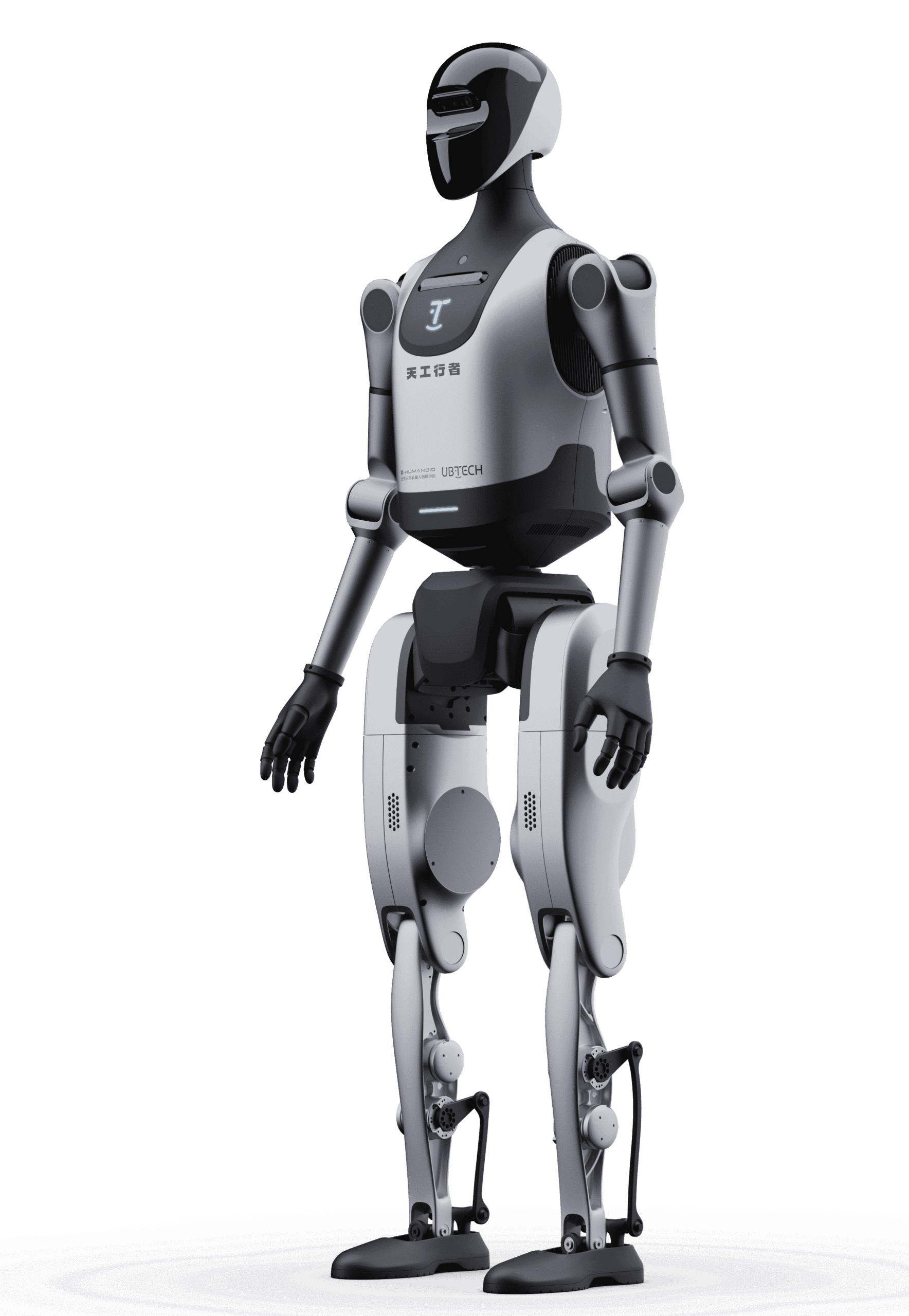

The Korben Aura E is a next-generation humanoid robot designed to assist
preparers on handling tasks: piece picking, placing in the bin
Command and visual control. Equipped with 2× NVIDIA ORIN (550 TOPS) and a multi-jointed gripper system, it integrates with a goods-to-robot picking station to handle high-turnover SKUs without tiring human operators.
Korben designs and integrates a range of professional robots for intralogistics and warehouse order picking: internal transport between stations, collaborative manipulation at the picking station, and placement in the shipping area.
Each robot runs on RobotOS, the system developed by Korben, which controls autonomous navigation, real-time obstacle avoidance, multi-point planning, and remote stream supervision.

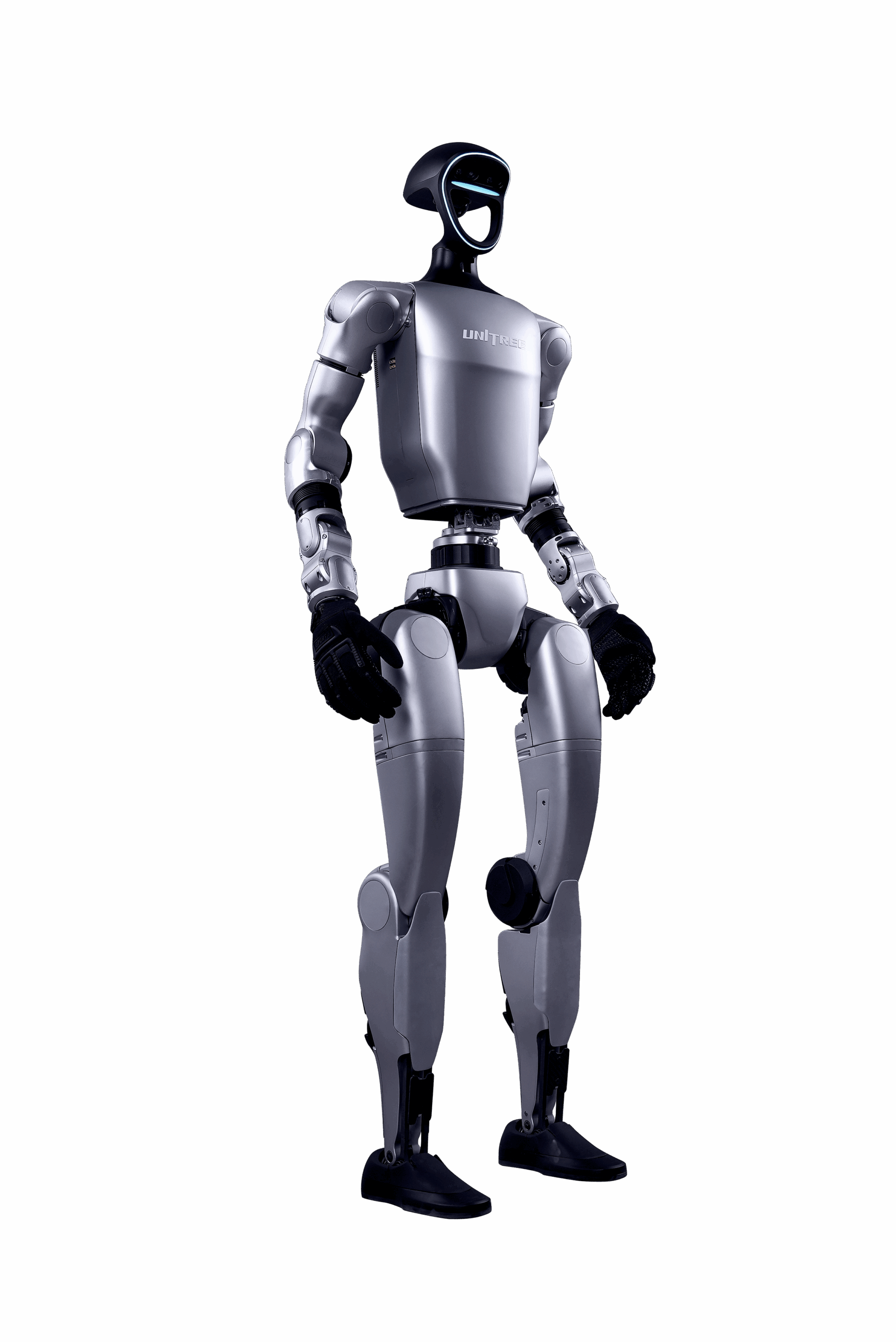
The Korben Aura G1 targets industrial and logistics environments where the preparation of
commands require both mobility and manipulation ability. It takes over tasks
repetitive sampling, drop-off in buffer zone, and transport between storage aisles.
Suitable for cosmetic, pharmaceutical, or e-commerce warehouses, it improves
productivity and reduces strain.
Korben also has the Atlas O2 models (for demanding industrial applications) and Delivery Pro Autodoor (for secure transport with a locked compartment) to cover all internal preparation and distribution scenarios.
Are you facing any of these issues?
In a typical warehouse, up to 60% of a picker’s time is spent moving around,
not in the collection. This hardship wears out the teams, slows down service and makes the rate climb
End-of-day error. An autonomous robot handles transport between storage areas.
and picking stations: your pickers stay at their stations, process more lines, and finish less
tired.
Black Friday, sales, promotional events, holiday seasons: the pace triples, the hours
additionally. A robotic preparation system absorbs variations without resorting
massive temporary staffing. You smooth out your operating costs and protect the quality of service, even when
High season.
One error in 100 lines seems acceptable. Multiplied by 10,000 orders per day, that's a
Operational drama: returns, complaints, reshipments, loss of trust. Robotics
delivers reliability exceeding 99.91% on properly configured models, and tracks each
Real-time operation. Error reduction is immediate.
The cost of an order picking robot depends on the type of solution and the complexity of
site and automation scope. Here are the transparent orders of magnitude.
The Korben implementation follows a five-step process: site audit (flow, plan, constraints), test
on-site with a robot in real-world conditions, configuration and integration with the WMS, training of
teams in less than half a day, continuous supervision with after-sales service in France. The deployment
The complete setup of a Korben robot takes 2 to 6 weeks, depending on the complexity of the site.
A robot for order picking automates all or part of the picking process: identification of the product code, retrieval of the product, transport to the picking station or the zone
shipping, drop into the order bin. It combines several technologies to perform these tasks autonomously.
SLAM mapping of the warehouse and real-time trajectory planning.
Specifically, the robot receives the preparation order from your management software, moves to
the aisle in question, retrieves the item, then places it in the picking station or directly into the bin
client. The «goods-to-robot» logic (the product comes to the robot) is currently the most efficient.
for high-volume warehouses
Order picking robotics encompasses several families, which must be known beforehand
to arbitrate a project.
High volumes, varied references, and strict deadlines. A preparation robot
The order stabilizes the pace, reduces picking errors, and allows for absorbing peaks.
seasonal (Black Friday, Christmas) without large-scale recruitment.
Small items, multiple references, hygiene and traceability requirements. Robotic picking provides
regularity, limits human manipulation, and facilitates quality audits. Aura robots
supplement automated storage solutions.
Controlled-temperature warehouses, strong ergonomic constraints for operators. A robot
autonomous driving supports repetitive trips in cold zones, which improves conditions for
work and safety. Palletizing robots handle frozen products in the shipping area.
Deep stocks, low-turnover but critical references for production continuity.
The sampling robot processes urgent orders, frees up time for technicians and
Streamlines flow between storage, workshop, and shipping.
Drive-through order preparation, click and collect, and store replenishment. Robotics
warehouse is becoming increasingly important for major retailers (Ocado, Amazon, Carrefour) and
becomes a standard to remain competitive on deadlines.
To robotize order picking is not just about buying a machine. Projects that
succeed in addressing the following points upstream.
Korben addresses each of these points during the audit phase to prevent a robot from being underutilized after a few weeks of service.
Try a Korben robot adapted to your needs for a few days.
A picking robot receives an order from the warehouse management system
(WMS), locates the reference, moves autonomously to the relevant storage area, picks
the product using a gripping system (suction cup, gripper, robotic arm), and then transports it
to the picking station or directly into the order bin. It combines SLAM mapping,
LiDAR sensors, computer vision, artificial intelligence, and machine learning for
execute these tasks in real-time without human supervision.
The benefits are measurable: reduction in picking errors (reliability greater than 99.9%)
%), increased productivity (up to 900 samples per hour from solutions
integrated), maximizing warehouse energy and space efficiency, cost smoothing
operational during peak activity, improved safety and ergonomics for
preparers. Strategically, robotic automation enhances your competitiveness
supply chain facing players like Amazon or Ocado.
Four main families are distinguished: autonomous mobile robots (AMRs) for transport
between zones, pick and place robotic arms for piece picking, robots
palletizing for the shipping area, and integrated goods-to-robot systems (Skypod, Movu,
Mecalux, SSI Schaefer). Korben offers in its range humanoid robots (Aura E, Aura G1)
for collaborative handling and AMRs (Delivery Carry Bot, Atlas O2) for transportation
intralogistics.
Integration follows five steps: site audit (flow, layout, aisles, floors, Wi-Fi network), robot testing in
real-world conditions, configuration and connection to WMS via API, team training,
continuous supervision. Implementation takes 2 to 6 weeks for a standard AMR, several months
for a complete goods-to-robot system. Korben favors a phased approach: we
Start with one area, measure the ROI, then expand to other streams.
Performance varies depending on the type of robot and the complexity of the parts. For standardized products, a pick-and-place robot achieves 600 to 900 picks per hour with reliability exceeding 99.9%. A transport AMR can make several dozen trips per hour between stations. Overall performance depends primarily on configuration: high-turnover warehouses, clearly identified items, and well-trained vision software enable the best performance metrics.
The main challenges are integration with the existing information system (WMS, TMS), Wi-Fi network quality in the aisles, safety in coexistence with human operators, team buy-in (change management), maintenance and spare parts availability, and flexibility for new SKUs. A project that ignores these points leads to an underutilized robot. Korben addresses these points from the audit phase to secure deployment.
Order picking robots speed up the flow between receiving, storage, picking, and shipping. They synchronize operations in real-time with the WMS, eliminate shortages due to absences or peak activity, and track every movement to facilitate audits. Across the supply chain, they shorten delivery times, reduce buffer stock, and improve overall customer service reliability.
No. The robot handles repetitive movements, carrying loads, and strenuous tasks. The order pickers maintain value-added jobs such as quality control, managing special cases, fleet supervision, and dispute resolution. The logistics labor market is experiencing a persistent shortage. Robotics helps stabilize the workforce and offer more qualifying, thus more attractive, positions.
Korben proposes both. Purchasing is more relevant for stable configurations and high volumes, with a depreciation period of 5 to 7 years. Long-term leasing (starting at €499/month for standard robots, €1,200/month for heavier AMRs) preserves cash flow, includes maintenance, and facilitates upgrading to newer models. Event-based leasing is suitable for testing a robot during a peak activity period or for a pilot project.
Korben complements large goods-to-robot systems like Amazon Robotics, Skypod (Exotec), Movu, or SSI Schaefer. Our range covers peripheral flows: transport between zones via Delivery Carry Bot and Atlas O2 AMRs, collaborative station manipulation via Aura E and G1 humanoid robots, and depositing in the shipping zone. For a high-volume e-commerce warehouse, combining an integrated system with Korben robots for ancillary flows offers the best cost-benefit ratio.
The first step is free: a Korben consultant visits your warehouse to understand your workflows, identify automatable tasks (picking, transport, palletizing), and estimate the ROI. If the project is relevant, we offer an on-site demonstration with a robot in real-world conditions, followed by a precise quote. Full deployment is implemented within 2 to 6 weeks after validation, including team training and after-sales service in France.
+33 (0)1 88 83 73 55
Monday through Friday, from 9 a.m. to 7 p.m.

Nash and young
Nash and young

+33 (0)1 83 75 57 23
Monday through Friday, from 9 a.m. to 7 p.m.

