
Server robot
Efficiency, fluidity, and service
If you manage one or multiple locations, the priority is simple: standardize the service. Same quality, same pace, same organization, regardless of the staff on duty. That's where a server robot makes perfect sense. It automates the delivery in the room, reduces repetitive tasks, and ensures regular execution, even when recruitment is tight. The right choice is made based on operational criteria: capacity charge, autonomy of battery, safety in public, detection of’obstacle, and ease of use. A well-designed robot combines sensors, a camera, and laser/LiDAR guidance to navigate without blocking pathways. The result: fewer wasted hours, more tables served, and predictable organization. In the following sections, we'll show you how to compare models (Pudu, BellaBot, and others) and estimate a realistic return on investment.
Table service and room delivery

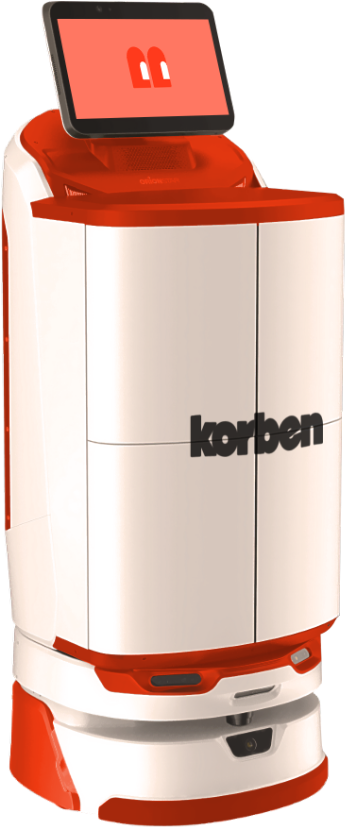

Delivery Pro
The Delivery Pro is designed for the service robotics in a professional environment.
It focuses on the essential: a navigation Autonomous, reliable, simple interaction and regular operation.
It integrates easily into the organization of an establishment, with a pragmatic implementation.
On the reinsurance side, the Delivery range relies on CE standards and a French SAV.

Server robots
When service intensifies, the real bottleneck isn't the kitchen.
It's the delivery In the dining room: dishes, drinks, desserts, feedback, bins and tableware.
A server robot supports these recurring trips.
He follows a path, avoids each obstacle, and a book at the right point, without monopolizing the staff.
Your team covers reception, advice, and’interaction with clients.
The robot, meanwhile, secures a regular pace, especially in a restaurant at a good passage.
- Meal and drink tray delivery, zone by zone.
- Transport of bins, baskets, consumables, and dish returns.
- Multi-zone tours during the lunch rush.
- Kitchen ↔ dining room ↔ pantry liaison without interruption.

Why does a server robot change the service?
- Reducing back-and-forth Repetitive trips go into automatic mode.
- Best pace Deliveries are going at a good pace, even during rush hour.
- Fewer errors more readable tours, standardized drop-off points.
- More regular service same level of quality, regardless of the team.
- Enhanced customer experience less waiting, more human attention.
Are you facing any of these issues?
Activity Pics → unstable cadence
The robot absorbs some of the deliveries to stabilize the pace.
Too many back-and-forth exchanges lead to fatigue and delays.
The robot takes on repetitive tasks, the staff maintains customer contact.
Customer wait → degraded experience
Deliveries are becoming faster and more predictable, without stress.
Safe service and enhanced hygiene
DELIVERY PRO
AUTODOOR
The locked/sealed compartment protect certain products during transport.
It reduces handling and ensures service continuity, even in public spaces.
Fast, efficient, and quiet server robot!
Some sites demand more than fast shipping.
They need to secure the content, limit manipulation, and strengthen confidentiality.
- Secure certain commands.
- Hygiene and limiting contact.
- Delivery to controlled access areas.
Multitasking transport and operational support
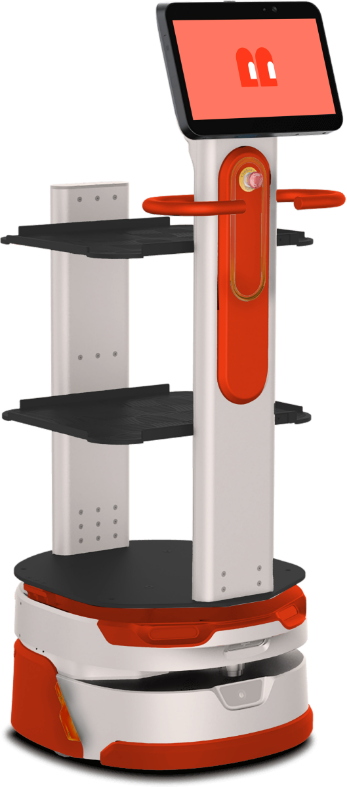
Delivery Carry Bot
Positioned as a multitasking support, it reduces repetitive trips.
It ensures continuity, especially when the organization changes based on teams.
A server robot for satisfied customers
When journeys are varied, an “assistant” robot becomes useful.
It transports bins.
- Secure certain commands.
- Hygiene and limiting contact.
- Delivery to controlled access areas.
FAQ
How do robots serve in restaurants?
A restaurant robot serves first at the food delivery in the room. It carries food and drinks on a tray, makes rounds, then returns to the kitchen. It reduces back and forth staff and stabilizes the pace, even during a rush. The navigation autonomous relies on a system of sensors (often lidar / laser and sometimes rgbd) to avoid the’obstacle and drive in the’environment. The’human keep the welcome and the’interaction with each client/guest.
What types of robot servers are there?
Several can be found category from« waiter robot«Delivery robots on tray for table service are the most common. There are also “privacy” versions with a secure compartment, useful in hospitality and sensitive environments. Multi-task robots transport bins, consumables, and internal products. Finally, reception robots complete the setup, with screens and messages.
How do robots improve restaurant service?
ls reduce the waiting times by speeding up kitchen-to-table delivery. They increase the’efficiency because the staff is walking less and concentrating on customer relations. Service becomes more regular, with scheduled rounds and zones. The technology navigation and sensors allow for navigation without disturbing customers, therefore more safety. On the side business, the’automation improve organization and perceived quality, especially in large rooms.
What are the advantages of server robots?
The advantages are operational and measurable. The robot reduces repetitive tasks, thus the pressure on the labor and the movements. It standardizes execution, which improves the quality from one service to another. It reinforces an innovative image, without replacing humans. With good battery, one capacity adapted and with short maintenance, it brings continuity. It also helps to better distribute work among teams.
Let's talk less, Let's test more
Try a Korben robot adapted to your needs for a few days.

Make an appointment with our expert
Do you need more information?Would you like to test our robots free of charge?Leave us your contact details and Sylvain, our expert, will call you back within 24 hours.

Sylvain Ballario
Business Development Director

